

John Plant has become a living legend as a result of his amazing YouTube channel, Primitive Technology. This is simply a series of videos in which the internet cult star makes things in the wild completely from scratch. He uses no modern tools or materials. There is no talking. He just gets on with it.
Now Primitive Technology’s ancient methods, rooted in fire, stone, earth, water and plants have been comprehensively laid out in a book.

With nearly 10 million subscribers, the book will perhaps offer little new to those very familiar with John Plant’s work. However what is different is that the book is a ‘step by step’ or ‘how to’ guide to making the various creations. It therefore describes and explains in text form and images what is used and how rather than relying purely on silent video.
Having grown up in rural North Queensland, Plant’s focus is on the natural resources that are available in Australia. He consequently offers ideas for substitution and encourages the reader to experiment with what can be found wherever they are.
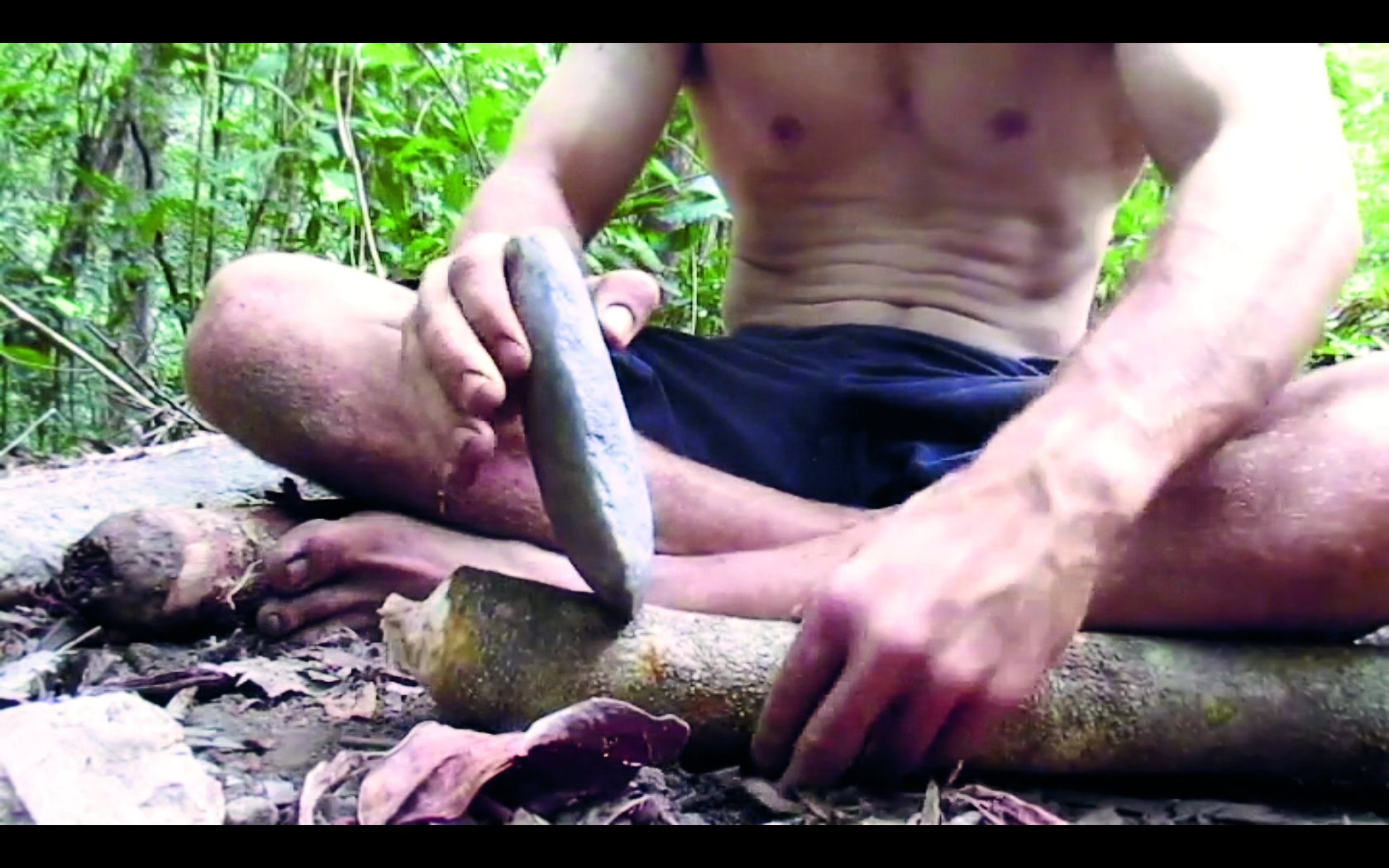
Broken up into sections, Primitive Technology takes the reader through a range of areas required for surviving in the wilderness. The sections are as follows:
- Basic Tool Kit
- Heat
- Hunt
- Clothing & Textiles
- Advanced Tool Kit
- Shelter
- Primitive Pyrotechnology
Basic Tool Kit
The basic tool kit is, not surprisingly, very basic. However, for the purist who truly wants to only use natural products, this is perfect. It covers some incredibly simple, but essential, tools such as the hammer stone and the digging stick. These are required for the making the items or structures that follow. More advanced tools are covered later on, including the cord drill and the water hammer. The projects are great even if you don’t use primitive tools. Afterall you may only be interested in a finished building!
Heat
In fact, the book focuses on a lot more than making buildings. The Heat section describes and explains how to make and use tools such as the bow drill and the burn bowl. One very interesting technique shown is stone boiling in which heated stones are used in conjunction with the burn bowl to boil water!
Clothing, Textiles and Hunting
Meanwhile, the Clothing & Textiles section takes us through such things as weave baskets, cordage, yarn spinning and making sandals. Learn how to make equipment used to procure food in the Hunt section. This part of the book covers bow and arrow, fish trap, sling and spear thrower. As well as showing how to make the items, descriptions are included of how to use them.
Shelter
The largest section of the book deals with shelter, from a drystone wall to a pyramidal hut. How to build a chimney and an ondol are also included.
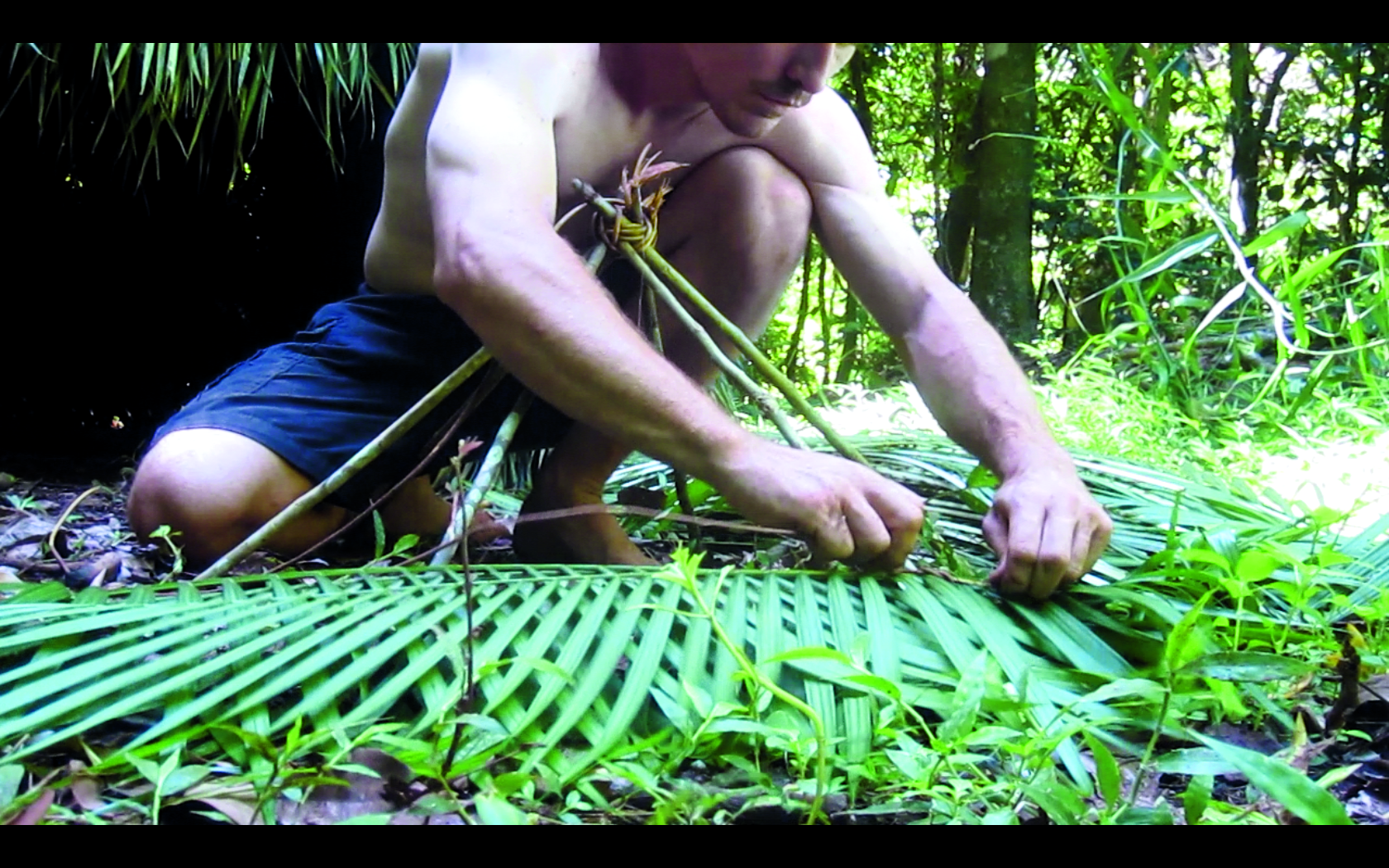
Throughout the publication are straightforward written descriptions about each tool or structure. Lists of required tools and materials are also provided. Measurements are given in both imperial and metric making it suitable for readers in the US and Europe where generally one system only is used. It’s also great for people like me who still use both systems! Really useful tips are given which will hopefully help ensure success.
However, unlike the video series, it is the straightforward step by step instructions that make this a wonderful ‘how to’ guide. These are complemented by easy to follow diagrams and photographs.
Pyrotechnology
Primitive Pyrotechnology is the concluding section. This part of the book covers such areas as making charcoal in a reusable mound and producing ceramics in a kiln. If already confident with toolmaking and shelter building, this section may offer some very different projects to have a go at.
Primitive Technology is most definitely a fantastic and ‘must have’ addition to any bushcrafter’s library. Used in conjunction with the YouTube channel, if desired, it gives an excellent insight to the projects. As a result of reading the book I feel very confident about trying out some of the activities for myself.
About the author of Primitive Technology:

John Plant is the creator of Primitive Technology, the viral YouTube channel with more than 9 million subscribers around the globe. A self-taught primitive technician, John has apprenticed as a soil tester, worked in a pottery shop and at a powder coating factory. Since 2015 he has been running his YouTube channel from Far North Queensland where he was born and raised.
For more on Primitive Technology, visit:
www.primitivetechnology.wordpress.com or subscribe to the Primitive Technology YouTube channel
