
Who is Ötzi the Iceman?
In 1991, a pair of German hikers stumbled upon a startling sight in the Ötztal Alps near the Austria-Italy border – a mummified corpse emerging from the melting glacier. What they had discovered was no ordinary mountaineer. This was Ötzi the Iceman, a 5,300-year-old natural mummy from the Chalcolithic (Copper Age) era, making him one of the oldest and best-preserved human specimens ever found. The nickname Ötzi is derived from the Ötztal Alps.
What makes Ötzi so special is that he is Europe’s oldest known mummy. Although there is no record of what he did in life, we do know part of his story, This is pieced together through his death, possessions and scientific investigation. The items found with him give an insight into his lifestyle.

Ötzi’s body and belongings offer a fascinating glimpse into prehistoric life and provide a treasure trove of knowledge for modern survivalists and bushcraft enthusiasts. Far from a primitive brute, Ötzi was a skilled outdoorsman with a deep understanding of his environment – something today’s bushcrafters can certainly relate to.
What Did Ötzi Carry? A Breakdown of His Survival Kit
Ötzi’s gear reveals a surprisingly sophisticated approach to wilderness living with each item serving a vital function. these are lessons that are very relevant to the modern bushcraft community.
1. Copper Axe
Perhaps the most iconic item Ötzi carried was his copper-bladed axe, fastened with birch tar and sinew onto a yew wood handle. However, this tool wasn’t just a weapon. It was a multi-purpose implement used for chopping wood, crafting and defence.
Modern use: While we now use steel or carbon tools, the principle remains the same – a compact, durable axe is still a bushcraft essential. Ötzi’s axe highlights the importance of tool maintenance and secure hafting techniques.

2. Longbow and Arrows
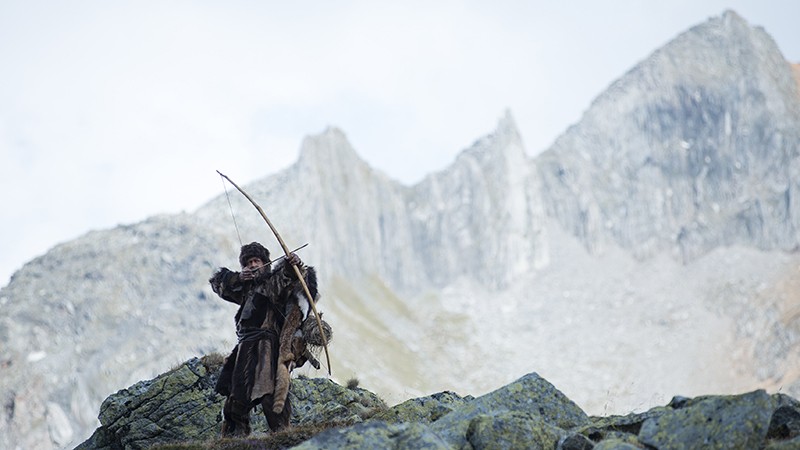
Ötzi carried an unfinished yew longbow and a quiver containing 14 arrows, some fletched and tipped with flint heads. These were designed for hunting game, and the craftsmanship suggests Ötzi was both a hunter and a bowyer.
Modern use: Practising traditional archery and flint knapping skills not only connects us to our ancestors but also equips us with effective, low-tech hunting methods.
3. Fire-Starting Kit
Among his gear was a fire-starting kit with flint, pyrite, and tinder fungus (Fomes fomentarius), along with dry grass. This reliable method created sparks to ignite a fire—a vital skill for warmth, cooking and protection.

Modern use: Today’s ferro rods and lighters are convenient, but learning to use natural tinders and traditional ignition methods builds resilience and honours time-tested techniques.
4. Clothing and Footwear
Ötzi was dressed in a multi-layered outfit made from animal hides and plant fibres: a grass cape for insulation, a bearskin hat, and leather shoes stuffed with grass for warmth. His footwear was specially designed for traversing icy terrain.
Modern use: While Gore-Tex and synthetic fibres dominate outdoor gear today, Ötzi reminds us that layering, natural insulation, and climate-specific design are key principles that transcend time.
5. Birch Bark Containers
He also carried birch bark containers, probably used to transport embers or store food and medicinal herbs. These were lightweight, water-resistant and ideal for his alpine travels.
Modern use: Birch bark is still valued in bushcraft for making containers, fire starters, and even roofing. Learning how to craft these items enhances your self-reliance and understanding of natural materials.
What Can Bushcrafters Learn from Ötzi?
Ötzi’s kit wasn’t random – it was a carefully curated selection of tools and materials that reflected deep ecological knowledge, craftsmanship, and survival instinct. Here’s how you can apply Ötzi’s legacy to your own bushcraft and survival practice:
1. Value Multi-Purpose Tools
Each item Ötzi carried had several uses and this principle can help streamline our kit without sacrificing functionality.
2. Master the Basics
Fire, shelter, hunting and clothing were all areas where Ötzi showed expertise. Instead of relying solely on modern gear, practise the core wilderness skills your ancestors once used daily.
3. Use Natural Materials
Ötzi’s reliance on local materials reminds us to observe, forage and craft from the landscape around us. These skills deepen the bushcraft experience and reduce dependency on shop-bought equipment.
4. Prepare for Harsh Environments
Whether you’re in the Alps or a rainy forest, preparation is vital. Ötzi was found with an arrowhead embedded in his shoulder and it is believed that this killed him. Moreover, his demise was likely hastened by injury and exposure. Learn from his hardships and ensure you’re equipped for changing conditions.
The Enduring Legacy of the Iceman
Ötzi the Iceman may have walked the Earth over five millennia ago, but his story resonates deeply with those who seek connection to the land, ancient knowledge and self-sufficiency. For bushcrafters and survivalists, he’s more than a historical figure – he’s a mentor from the past. He is a reminder that nature rewards those who are observant, prepared and adaptable.
So next time you’re out crafting a bow, kindling a fire from fungus or weaving a grass mat, think of Ötzi – and know that you’re part of a long and honourable tradition.
You may also be interested in:
The Atlatl: A Technological Breakthrough in Primitive Hunting – by Nick Allen
How to make a Kali Hunting ‘Boomerang’ – by Kev Newton
Indigenous Australian Glue and How to Make it – by Tom Foley
