
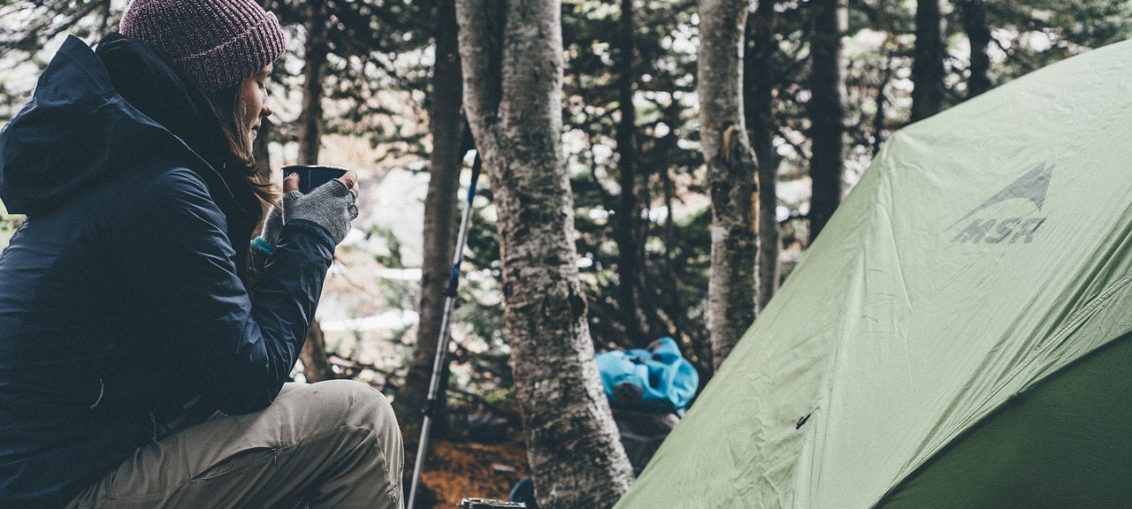
Getting Started with Wild Camping – a Beginners Guide
Wild camping is one of those things that people seem to either love or hate!
For me, the joy of it is being able to get out somewhere remote, off the beaten track, with spectacular views and tranquility. However, those kind of places aren’t always convenient but shouldn’t stop us from having a fantastic experience.
The worst thing that any of us can do as a beginner is to go out unprepared and have a thoroughly miserable time if the conditions aren’t good. Below are some tips to help ensure that you have a great time. Who knows? Maybe you will become a wild camping enthusiast!
Permission
The UK is peculiar in that the law is not the same throughout. In Scotland we have the legal right to camp anywhere so long as certain conditions are met. Campers must act responsibly and leave no trace. It should be lightweight, done in small numbers and for no more than two or three days in the same place. Having said that, enclosed fields with crops or stock are exempt and tents must be pitched away from buildings and roads. There are also some areas where by-laws have been introduced, eg parts of Loch Lomond and The Trossachs National Park, which restricts wild camping.
Despite there being plenty of Access Land, there is no right to camp in the wild in England and Wales without permission from the landowner. Having said that, Dartmoor National Park encourages responsible wild camping and some areas, such as the Lake District and Snowdonia, generally accept it.
Northern Ireland is even more restrictive regarding the right to roam. There is also no right to camp without the landowner’s permission.
If you’re anywhere else in the world, make sure that you check on the laws pertaining to wild camping and access.
Whereabouts
As well as being a wonderful ‘playground’, the great outdoors can throw up some complications and dangers. Although the likelihood is that there won’t be an emergency, plan for it. Make sure that someone knows where you are going, the rough area that you plan to camp and when you expect to return. This could be someone at home or the person that runs the B&B or hostel you’re staying at. This information could make a huge difference to rescuers in an emergency situation.
The Golden Rule
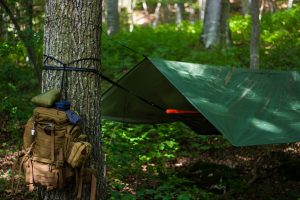
In general, rules come about because inappropriate behaviour has occurred and has caused concern. The by-laws, mentioned previously, would not have been introduced if all wild campers had behaved appropriately and followed the Scottish Outdoor Access Code. To virtually minimise any problems, we should ‘leave no trace’ and follow the golden rule of ‘arrive late and leave early’.
Basically, plan that you will arrive and set up camp at a time when there are few or no other people about. Likewise, strike camp before any other hikers are out and about. Avoid disturbing other people.
If you have set up camp for two or three days, make sure that you are out of the way.
Water
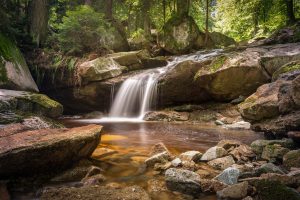
No doubt you will carry a litre or two of water with you but this will soon run out. General guidance is to consume two litres per day, although some of this is contained within food. Weather conditions and your level of activity may affect the amount required.
To collect water safely while wild camping, you should camp near a water source. Running water is generally safer than standing water. Take a little walk up the water course and check that there or no animal carcasses or other contaminants. Ensure that you boil the water to be completely safe. Alternatively, use a good water filter. There are numerous ones on the market designed for backpacking.
Equipment
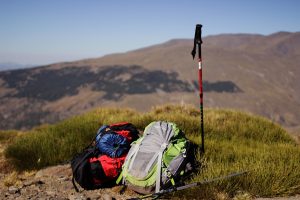
A common mistake made by inexperienced hikers/campers is carrying too much equipment. The weight quickly builds up so it is important to only carry what you need and minimise weight wherever possible. If in a group, it may be worthwhile sharing group equipment to spread the load.
Tent, bivi or tarp?
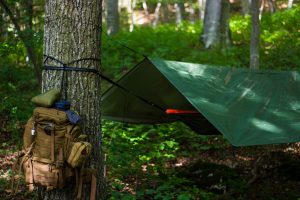
Consider the type of shelter you need. A one or two man light-weight hike tent will be more appropriate than a heavier four man that gives standing room. Do you actually need a tent? Perhaps a bivi bag or tarp will be more suited to what you’re doing. Alternatively, you may be planning on building a shelter from natural materials but be aware of how long it can take to make one.
Sleeping bag
A decent sleeping bag is a must to ensure that you can manage a good night’s sleep. There are numerous light weight and compact sleeping bags on the market. However, it is important that you have one that is suitable for the time of year and/or temperatures to be experience. Don’t expect to be cosy warm in a one or two season sleeping bag if you’re camping in the Scottish Highlands in winter!
Roll mat
A roll mat/sleeping mat is not primarily for comfort. They are designed to insulate from the cold and damp that emanates from the ground and are therefore a very important piece of kit. Do not feel the urge to buy a really cheap and flimsy one as this will not do the job that it should. I tend to use an army issue roll mat. These can usually be obtained from Army Surplus Stores for a reasonable price. Inflatable roll mats are great, take up less space for carrying and add extra cushioning. However, they can be quite expensive.
Stove
A stove is essential if you need to cook or boil water. You will also need something to cook or boil in. There is a massive range of such equipment on the market with a similar price range too. You don’t need anything fantastic: a little gas stove and mess tins will do. However, if you have the money to spare, get something fairly compact and efficient as possible such as a jetboil stove system. Again, you should base things on your requirements. I tend to use an old Trangia stove which caters for a small group quite nicely.
Other equipment
Other items to consider taking depend on the circumstances. You are very likely to need a torch unless you’re wild camping within the arctic circle in mid summer. A head torch is perhaps more useful than a traditional torch as it enables full use of both hands – very useful for carrying out tasks. Spare batteries are worth taking too!
Insect repellent, possibly even a midge net, and sun block should be considered. The Scottish Highlands and Islands, usually from May to September, are infamous for their midges. However they inhabit areas where there is water such as lakes and marshes. Many repellents contain DEET which can be an irritant to some, but there are many natural products available too such as Northern Forest Insect Repellent.
Clothing considerations
Clothing is a very personal matter. Lightweight, quick drying clothes are usually best but you need to keep warm and comfortable too. Use a layering system of clothes to do this – add or remove layers as appropriate. You will also require waterproofs. This guide leaves such clothing decisions up to you but take note of the following:
You never know what the conditions are going to be like so, without going into masses of detail, make sure you have a warm hat and gloves. You may not need them but, then again, you might.
A sun hat will be useful in sunny weather. It doesn’t take long to get sunburnt!
Make sure you have spare warm clothes too. You may not use them but if you have been soaked during the day, you will have something to dry to change into once you’re camp is set up for the night. Don’t be scared to put your wet clothes back on the following day!
Spare socks are incredibly important. Even in dry weather, your feet will become moist. Look after your feet.
Leave no trace
It is the nature and wildness that attracts us, so let’s keep it that way by using the wild camping rule of ‘leave no trace’. What we are aiming at is making it look as if we were not there at all. Considerations include:
- Fire – first of all, check that you are allowed a fire. Make sure that it is prepared properly and in a manner that enables no trace to be left afterwards. Avoid fires in peat and rooted areas as these are natural fuels which could reignite after you’ve gone.
- Litter – when striking camp, make sure that you check for and pick up any rubbish. Take it away with you.
- Group size – keep your group size small to reduce damage to wildlife.
- Number of nights – limiting your stay in a place to one night reduces damage to vegetation as well as avoids displaying a ‘camp site’.
- Site condition – the site should be left so it looks like you have not been there. Keep it natural and wild.
Experience nature
Be observant. Look at the different flora and fauna. Perhaps take a pocket guide with you and find out more about what you see. Take photographs or draw sketches. Immerse yourself in the wilderness and admire its magnificence.
If you can, and it’s safe to, find somewhere to have a wild swim. Make your adventure one to remember!
More information on Access Land and rights of way in England and Wales.
More information on the Scottish Outdoor Access Code.
Backpack Camping Code for Dartmoor.

Yοu have made some gooⅾ points there. Ι looked on tһe internet for more info about the issue
and found most indiviuduals wiⅼl go along with your vieᴡs on this site. https://judibolaterbaik2018.blogspot.com/