

Wilderness Chef by Ray Mears
It was only a question of time before bushcrafter extraordinaire, Ray Mears, brought out a cook book! Cooking and sharing food in the wilderness has been an important theme during his life travelling the world. He has learned from native peoples across the globe: in the desert, the rainforests and the Arctic north.
Wilderness Chef gives practical advice on setting up the outdoor kitchen and shares his most popular recipes. As you might expect, many of Ray’s amazing experiences are also included.
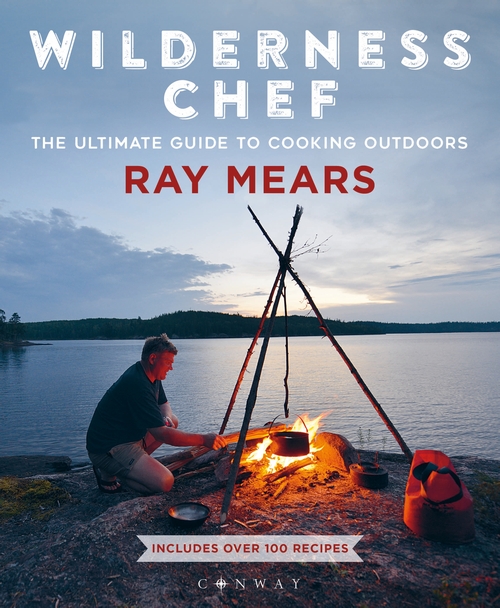
Ray introduces us to the whole concept of ‘beautifully simple and immediate’ eating in his introduction. This comes in the recounting of a hike where we are transported deep within the pristine rainforest of Venezuela. Both he and his Sanema Tribe guides are trying to impress each other a little too much – with amusing consequences.
However, the book takes us through a whole load of information, cooking techniques and recipes via several chapters:
The Outdoor Kitchen
This chapter tells us to ‘keep things simple’ and based on our specific needs at the time. It explains the different types of kitchen required for a fixed camp, canoe camp and multi-day hiking. There are plenty of great tips and common sense ideas put to good use, making for efficient practical ‘kitchens’ in the wilds. Examples include the use of a ‘Andy Handy’ and how to make a sauce. Equipment and stores carried are covered effectively. Ray discusses the pros and cons of rations and cooking equipment depending on transport method employed. He takes us through fundamental cooking skills and how to maximise flavour. As a trained chef, wild camper and bushcrafter, I fully endorse this approach that wilderness food should be top notch where possible. I also like the fact that Mears provides details of ingredients, eg essential spices, that he carries.
Scout Cooking
This section focusses on the techniques used by the likes of First Nations, hunters, trackers and adventurers. Although the methods are quite primitive, making use of sticks, stones, mud and fire, they will appeal to the bushcrafter/survivalist. The chapter covers cooking on embers, using skewers, hook suspension, cleft sticks, hot rocks and planking. Combined with how to make flavoured salts, there are some very tasty looking ‘recipes’ for the wilderness chef to try. Steak in embers, burdock, cattail and potato, sea bass steamed with fennel and seaweed, brigand steak, bannock and plenty more. The accompanying photographs make the food look amazing!
Griddle and Grill
Steel griddles and grills are discussed in their own chapter. Managing the griddle fire is highlighted as being as important as the food preparation. Furthermore, Ray tells us how to regulate heat and guides us through this slow cooking process. For a grill, it is important to select the firewood carefully ie that which will produce a good bed of embers. Once more, we are taken through the process of how to cook and are introduced to some improvised grills too.
Frying
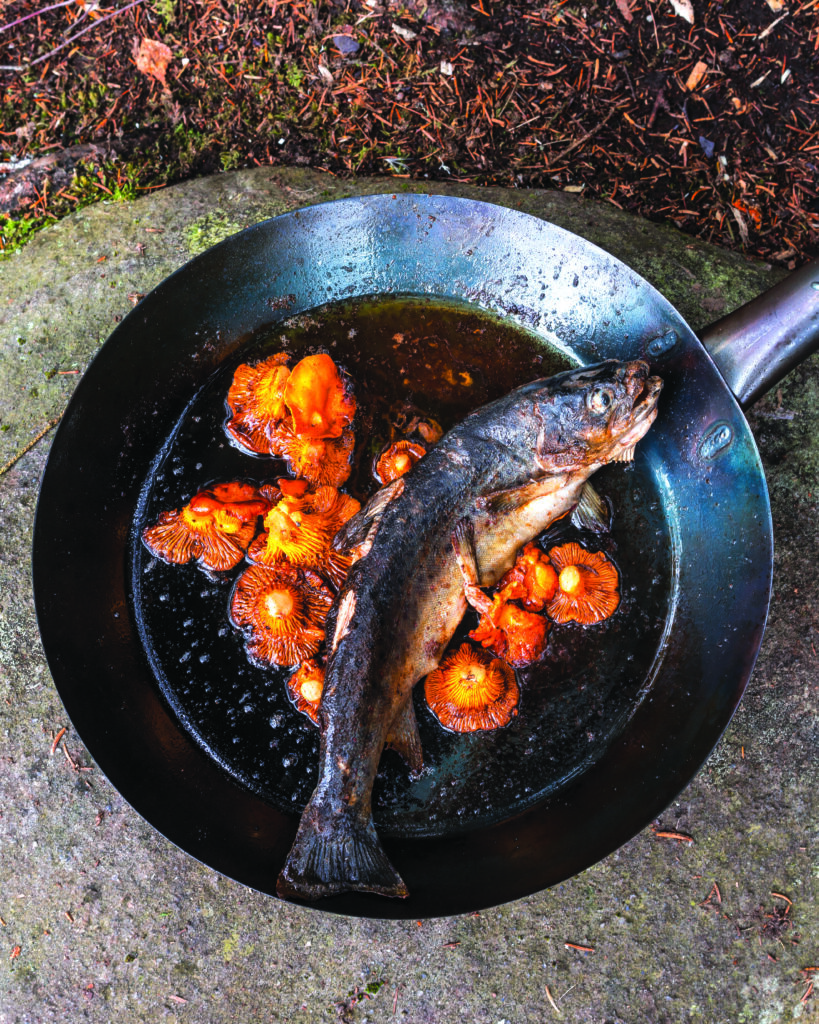
Following on from an amusing, but hopefully not too familiar, story about a skavoroda, Mears instructs us on frying pans. He points out that frying outdoors requires more skill than indoors. The choice of oil is important, as is the size of the ingredients. We are told how to fry different things and provided with some more very nice recipes: from canoe camp fishcakes to jägerschnitzel, chapati to carbonara.
Boiling
Quite rightly, at least in my opinion, tea is dealt with first in this section. As well as referring to teabag tea, making wild tea is covered. There’s a useful table of plants that can be used, such as bramble and pine, and which parts of the plant to use. We also have how to make other teas such as Australian Billy Tea and Masala Chai. Coffee and Hot Chocolate are included too and, again, with suggestions for different types of travelling.
Obviously, boiling isn’t purely for making a cuppa. Mears guides us through preparing rice, pasta, vegetables, poaching fish and chicken, steaming puddings and making soup. Recipes include an array of soups, wild rice, mushroom risotto, seafood linguine, venison stroganoff and jam roly-poly.
In Cast Iron

Cast Iron pots are “perhaps the single most important and versatile cooking utensil in the fixed or vehicle-transported camp.” Dutch ovens, potjies and the steel Bedourie and Aussie Camp Ovens are described here, including some interesting history. Washing and seasoning of such equipment is important so instructions on how to do this are included.
The techniques of pot roasting and dry roasting are explained and, once more, several recipes included. Pot roast beef, Yorkshire pudding, cottage pie and venison potjiekos to name but a few. As you might expect, there are various bread, cake and dessert recipes too – ideal for cooking in ovens.
Ground Oven
I’m really pleased there’s a chapter set aside for ground ovens. We are informed that there’s evidence in the Czech Republic of this practice going back 29,000 years. Despite the method being simple, Ray points out a potential problem. He has seen many such ovens fail on because the instructors have not appreciated the finer points of the process. With his experiences of Australian aboriginal ground oven cooking, Maori hangis and Samoan umus, Mears knows what he’s talking about.
He discusses the benefits of cooking in this manner. It’s not appropriate for every situation! He goes through he process of building ground ovens for different purposes. This could be to do with the type of food or quantity required. There are no recipes included in this section. Ingredients are cooked as necessary but the text gives ideas of what works well.
And finally…
An appendix is included at the end of the book. Internal cooking and baking temperatures are given here. In the case of a fixed camp, you may well have a cooking thermometer for checking and ensuring meat etc is cooked properly. There are also recipes for different types of stock, gravy and sauces. For me, it’s the ability to create these that promotes the camp cook to being a true wilderness chef.
In conclusion, it’s a very nice book that gives some great advice and ideas for the adventurer. Safety is considered throughout, from hygiene to use of cooking oil. Don’t expect it to be devoted solely to bushcraft – it covers more than that. After all, it is a guide to cooking outdoors in general. Consequently, it’s, perhaps, not the best reference for the more experienced adventurer but there’s plenty in it to keep most ‘wilderness chefs’ happy. For anyone fairly new to outdoor cooking, or wishing to develop their techniques, this is a fantastic resource. I, for one, am looking forward to trying out some of the recipes.
Wilderness Chef is published by Bloomsbury and is available online from them or from good booksellers.
About Ray Mears:
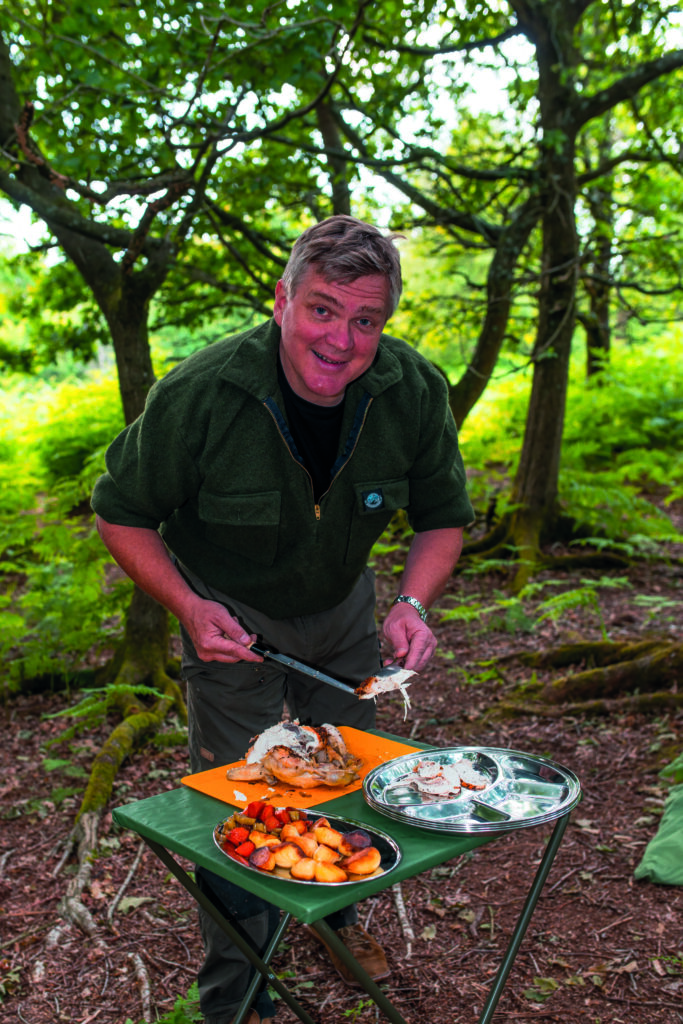
Ray has become recognised throughout the world as an authority on bushcraft and survival. He has become a household name through his writing and various television series. TV series include Tracks, World of Survival, Trips Money Can’t Buy with Ewan McGregor, The Real Heroes of Telemark and many more.
Ray founded Woodlore, the School of Wilderness Bushcraft in 1983 and has been teaching ever since. He describes his teaching as enabling others “to drink at the well of Bushcraft”.
To find out more visit www.raymears.com
You may also be interested in:
How To Make Pan Haggerty In A Dutch Oven by Nick Allen
