
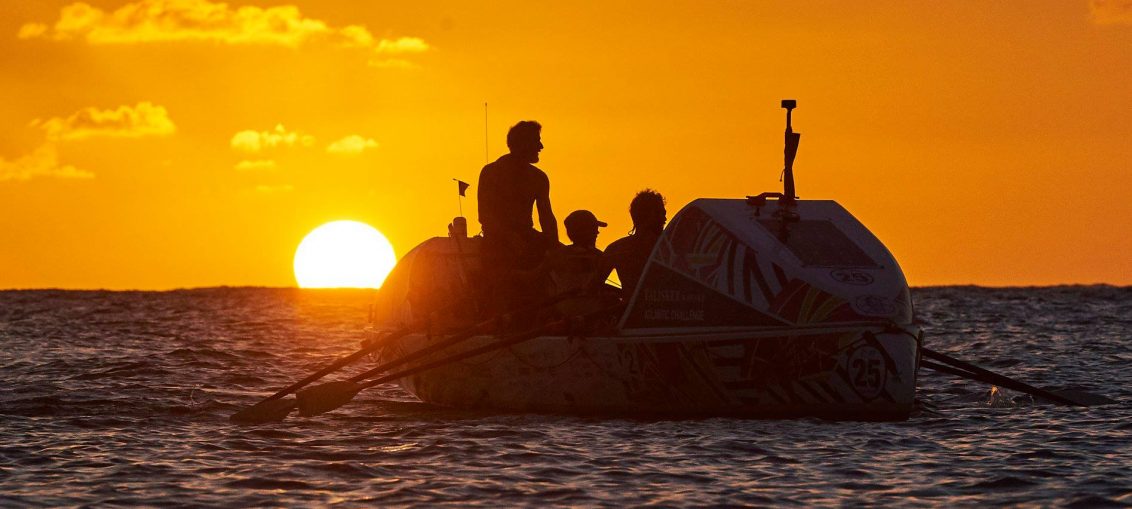
Rowing the Northwest Passage – an interview with Mark Agnew
Just hearing the words ‘Northwest Passage’ conjures up incredible stories of adventurous exploration in incredibly tough conditions. Historically, traversing the hazardous route required navigating around thousands of giant icebergs. These could rise up to 100 metres above the surface of the water. Furthermore, huge masses of sea ice could seal the passage and trap ships for months at a time. In other words, it wasn’t an easy or commercially viable route.
Despite all that, as early as the second century AD, there has been the idea of a route from Europe to East Asia. Ptolemy and the ancient Greeks thought so. However, it wasn’t until the 15th century when Europeans attempted to find it. The search is littered with names such as Cabot, Cartier, Hudson, Rae and Franklin. Unfortunately for them, treacherous conditions and sea ice cover made the route impassable. Many didn’t survive. But eventually, in 1906, the Norwegian explorer, Amundsen, crossed the route entirely by sea. This took three years to do!
In the summer of 2007, the route was entirely ice-free for the first time in recorded history. This is a result of recent climate change. Arctic ice cover has thinned and the passage has opened up to marine shipping.

Northwest Passage 2021
With all that in mind, and despite the passage being less icy, a group has set themselves the challenge of rowing the entire Northwest Passage in 2021. I caught up with one of the team, Mark Agnew, to find out a little more about it.
Describe the challenge and its goals.
The challenge is simple and not simple at the same time. On the face of it, the aim is to be the first people to row the Northwest Passage, the Arctic Route that links the Atlantic and the Pacific. But we have a higher purpose too: the expedition is only possible because the ice is retreating for longer every year. The Washington Post has reported that 2020 could be a record low for sea ice.
We hope that just by passing through it, we can draw attention to how rapidly the environment is changing. The effects of climate change are pronounced in the polar regions and have a massive effect on inuit way of life and wildlife – polar and grizzly bears are meeting for the first time and breeding, producing fertile off-spring, for example. But the ramifications are not just local to the region. It could alter ocean circulations and then have devastating effects on global climates.
We are backing up the message with data collection for climate change scientists.
What support, if any, will you have?
The expedition is unsupported. So, we will carry all our own food, make water with desalinators and row in continuous shifts – two hours on, two hours off – all day and all night for up to two months, unless there’s a storm. Usually in ocean rowing, there is nothing to hit and nowhere to land. So, even in a storm, you just put out a sea anchor – a large parachute type thing that keeps you head on to the wind – and wait it out. But with rocky shores and pack ice in close vicinity, we may have to make a dash for the shore if the wind or weather turns. Then we will have to haul our boats onto a beach or safe haven and wait it out in tents.
Tell me a little about yourself and the team.
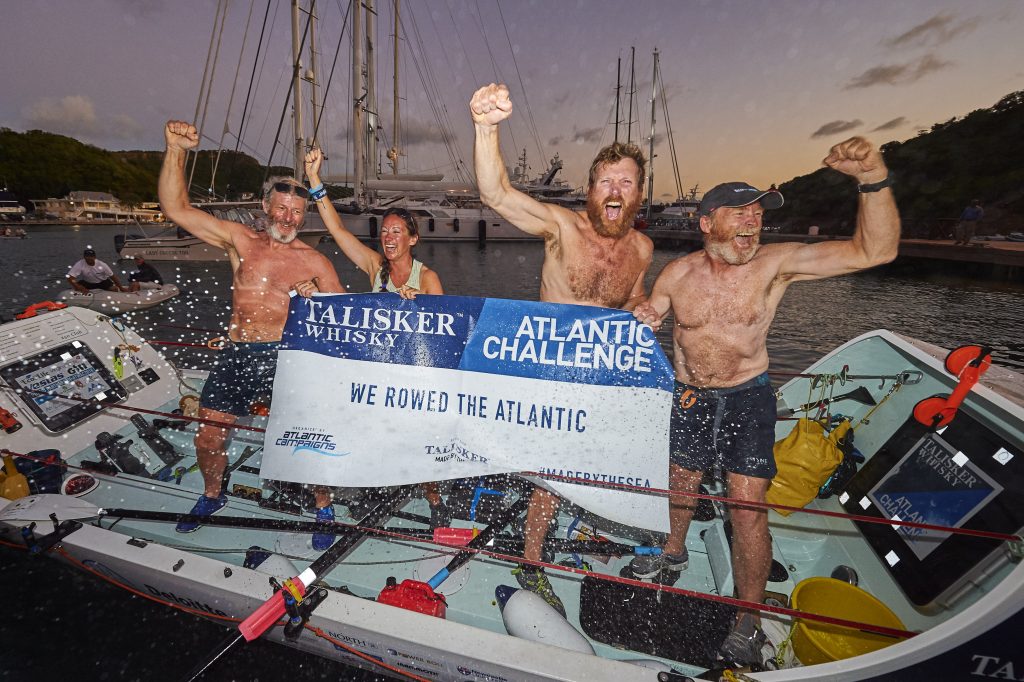
This team is basically the avengers of ocean rowing. We are packed with experienced adventurers. Three of the crew – Claire Hughes, Allan Huntly and Phil Kite – were in a four person team that set the mixed record for rowing across the Atlantic in 2018. Jack Hopkins has also crossed the Atlantic. Tim Crockett rowed it solo in 2018. Our skipper, Leven Brown, has rowed over 30,000 nautical miles, including the mid-Atlantic a number of times, the North Atlantic and the Indian Ocean.
My own experience is more chequered. My ambition was always to be the first person to row the Northwest Passage. I heard Leven had the same dream. So a couple of weeks before I set off to row the Atlantic in 2016, I called him and introduced myself. But unfortunately, the crossing didn’t go to plan and we were rescued after just a couple of days. The captain turned out to be a bit of an unreliable person, and the boat he built was not seaworthy.
Again, in 2018, my second attempt to cross the Atlantic was scuppered after just a few days due to technical reasons. After the second attempt in particular I was gutted. I felt completely defeated and at my lowest ebb for months. I still think about it almost everyday. So now, the Northwest Passage has morphed into personal redemption. It will be the ultimate catharsis if we make it through. I think about the sense of relief I’ll experience when I train or feel unmotivated. But I know I have to temper my expectations with the knowledge that there are a great many variables out of my control that might prevent us getting through – mainly the sea ice.
How long do you expect it to take?
The sea ice will be open for about two months, so less than 8 weeks hopefully. But the weather will be a huge factor in determining how quickly we get through even if the ice is clear.
Have you been inspired by the likes of McClure, Rae, Franklin and Amundsen who were all instrumental in exploring and navigating the NW Passage?
Absolutely. I grew up reading all of the stories of the age of exploration. It’s why the Northwest Passage captured my imagination. There are many ‘firsts’ to be done, but in my opinion this is the last GREAT first because of the history of the Northwest Passage. For hundreds of years, the most famous explorers have sought firsts in the Northwest Passage. The first to find it, the first to make it through, the first to make it in an open boat etc… This is the final chapter of one of the most storied sites of exploration on earth and the lure of being a small part in this saga is too much to resist.
But the explorer who inspired me the most is my Dad – Crispin Agnew. He mapped sections of Greenland in the 1960s, led mapping expeditions to Patagonia, went to Elephant Island and led expeditions to the Himalayas. In all honesty, I didn’t really understand what my dad had done until after I left university. I was proud, and would show off about his achievements but it wasn’t until I got my first office job and began to realise I was the same age as he was when he first went to Greenland.
Yet here I was just staring down decades of office work to come. It sparked a bit of an existential crisis. Then I took more of an interest in his exploration. Now his stories fascinate me. He’s too old to join us in the Northwest Passage, but in some strange way I’ll feel like it is a shared experience with him.

What will you eat? Will you be hunting and foraging etc?
We will live off dried food packs. We will need about 6,000 calories a day, so we cannot rely on hunting. But we might bring a fishing rod or two. We can hang them off the back of the boat, depending on the weather. Or, on the occasions we are shore bound by a storm we can spin from the beach. I’m not sure the other’s are into fishing, but I love it!
As the ice melts for longer and longer, there’s reports of Atlantic Salmon and Pacific Salmon beginning to creep along the Northwest Passage from their respective oceans. So, who knows, we could catch a new species of mixed-Salmon that will further show the worrying effect on the environment.
Where will you sleep?
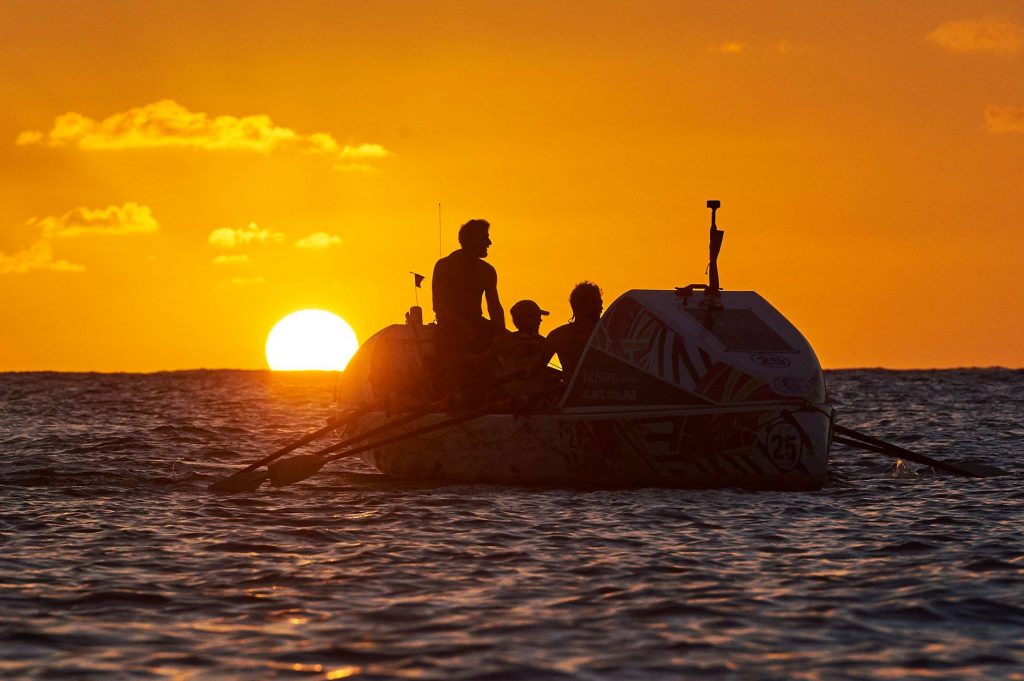
The boats are custom built for ocean rowing, so have little cabins at each end. They are just about big enough to lie down in. Even sitting up is a struggle. This is our bedroom. One of you sleeps, while the other one rows.
What equipment will you take with you?
Lots and lots! Dry suits. Food. Solar panels. Desalinators. The boats and oars. That is the main stuff.
How is the challenge being funded? How can the general public help with this?
We are creating a film with Michael Pitts, Emmy award winner for Blue Planet. Furthermore, we hope to attract more sponsors with the film and other PR benefits, such as logos, talks, traditional and social media.
Our very own Northwest Passage Expedition Gin, distilled in Orkney, Scotland is being launched soon. Nearly all of the Hudson Bay and Northwest Company’s employees came from Orkney, so there is a historical link. The water used to make the gin is from the same well Captain Cook filled his ship from before heading to sea and to hunt for the Northwest Passage. The flavours are botanicals found both in Orkney and in the Northwest Passage. So, if anyone wants to support us then buy all their friends and family a bottle of delicious gin as a gift!
Introductions are also great. If anyone thinks of a friend or company they know who would be interested to hear more, then put us in touch.
What next?
Who knows? Once this life ambition has finally been fulfilled, perhaps the itch will have been scratched and I can go on a less demanding route. Perhaps the Atlantic is a monkey I’ll still need to get off my back. I’d love to do an adventure with my Dad. Time will tell!
About Mark Agnew:
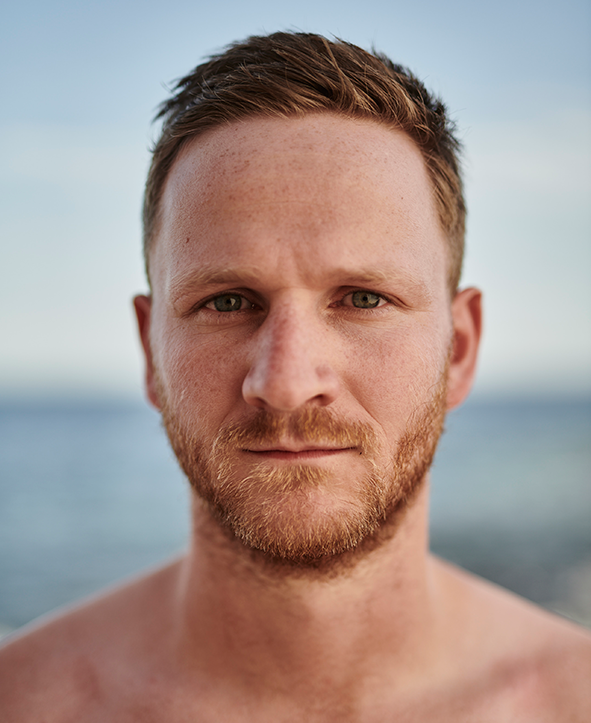
Mark Agnew, 29, was born and raised in Edinburgh, Scotland, but now lives in Hong Kong. He’s always had an interest in the outdoors but it wasn’t until after university that it morphed into a more serious passion for adventure, sparked by an unsupported walk across Scotland, driving from London to Mongolia and taking up mountaineering.
Mark works as the Outdoor & Extreme Sports Editor for the South China Morning Post, a role he landed when the SCMP interviewed him about his first attempt to row the Atlantic, during which they discovered he was a journalist and offered him a job.
You can follow him on instagram.
For more information:
Visit the NWP 2021 website.
Like the expedition on Facebook.
Follow the team’s progress on Instagram.
