

Australians love the idea of getting out into the bush and being at one with nature but venturing out can be a dangerous pastime. If you don’t know what you’re doing and are not prepared it can be incredibly dangerous. Learning wilderness survival skills, such as fire making, water procurement, building a shelter or using signalling devices, greatly improves your chances of surviving. The probability of being rescued, in the unfortunate event of something going wrong, is therefore much better. This could be the result of becoming lost or injured in a remote area or even a vehicle breakdown.
4-Wheel Drive Camping
In recent years, vehicle camping has become a huge thing in Australia. More people are gaining access to remote areas via the use of their 4WD’s.
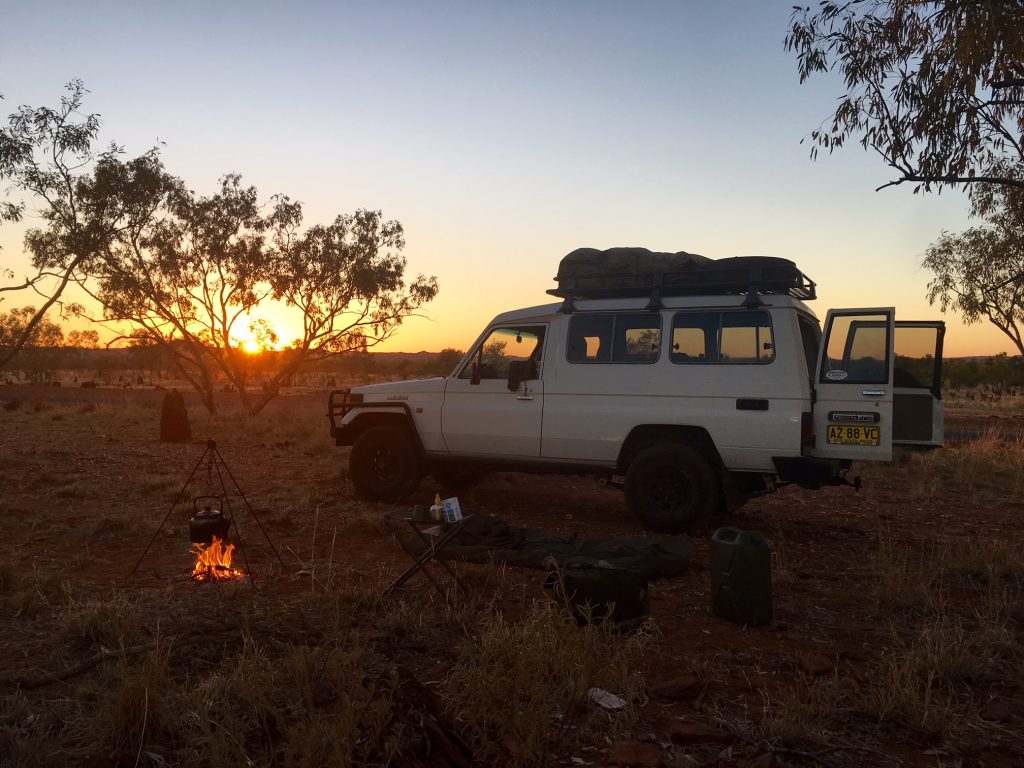
This has been both a good and a bad thing. It has enabled more people to get out, see and enjoy more of our large beautiful country. However, people have become too overly dependent upon the ridiculous amount of unnecessary equipment and paraphernalia that goes with it. This over dependence on equipment, coupled with a very poor knowledge of bush skills has been a huge problem. It has led to a number of fatalities in our outback areas and will continue to do so. People simply don’t know what to do once things stop working or they find themselves lost without their equipment.
“In case something goes wrong”
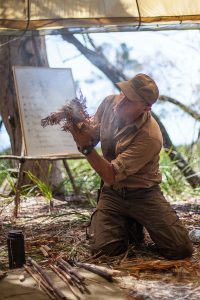
Unfortunately, a great number of Australian’s only see learning survival skills as something “they have to learn just in case something goes wrong”. Most don’t realise that a lot of the skills learnt in survival training, and it’s very different parent subject “bushcraft”, are fun and interesting in their own right. Furthermore, they instil a deep respect for nature and the environment. Many Australians, when it comes to bush skills, consider themselves to be “self proclaimed experts”. However, in reality, nothing could be further from the truth. 7 out of 10 Australians are not able to light and maintain a fire correctly. What’s more, they don’t know how to find South using the Southern Cross!
Survival / Bushcraft / Camping
What’s the difference?
There are significant differences between survival, bushcraft and camping and most people don’t realise what these differences are.
Survival training is what the military teaches our soldiers, pilots and seamen. This is to enable them to stay alive, in remote or hostile environments, long enough to be rescued or effect self rescue.
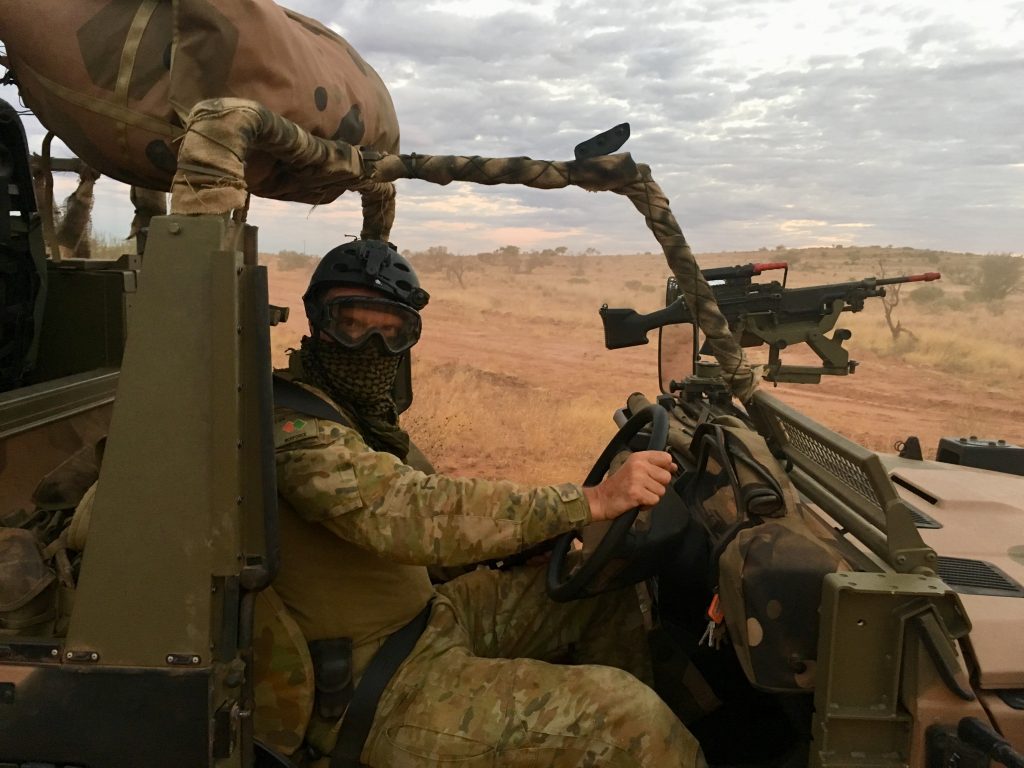
During World War 2 there was the real threat of pilots being shot down almost anywhere in the world. The need, therefore, arose for survival manuals with universal principals that could be applied in any environment.
Relevant survival training
Survival training is designed to teach serviceman a variety of necessary skills in the shortest possible time. These skills include learning the basics of shelter building, fire making, water and food procurement, navigation, signalling and the survival priorities for different environments. Many civilian activities and extreme sports such as mountaineering, climbing, hiking, cross country skiing etc require survival type training. This should be relevant to the chosen activity being undertaken in order to participate safely.
Something has gone wrong
Survival type training is typically focused around a 72 hour emergency situation where something has gone wrong. This could be a vehicle accident, plane crash, natural disaster, war zone or someone becoming lost in the bush etc.
What is ‘survival’?
Survival training is primarily equipment focussed or improvising with equipment. This is to facilitate getting out of a particular situation and back to safety as fast as possible and in any way possible. There is little or no regard for nature or the environment in the process.
The word “survival” became popularised in the 80’s with a number of things:
- “Rambo” type movies
- the do it all “survival knife”
- the romantic, yet misconceived, idea that man needed to “fight” nature and the elements in order to survive!
This has led to a spate of reality based TV shows in recent years depicting man “against” the natural world. Some good, some not so good and some absolute rubbish!
These shows have popularised outdoor pursuits and sparked an interest in the “survival world” which is a positive thing. However, these have been primarily focused on entertainment and drama to secure ratings. Consequently, there is less emphasis on educating the public about realistic skills and best practice.
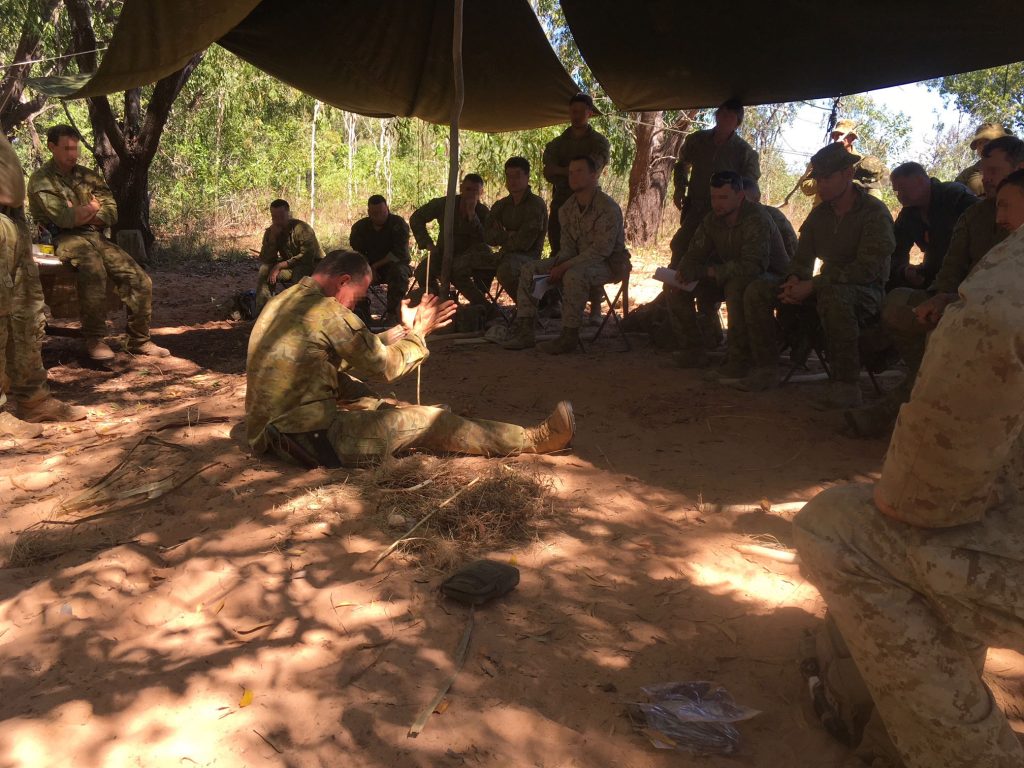
The author teaching soldiers on an army survival course how to make fire using a traditional friction fire method known as the hand drill
What is ‘bushcraft’?
Bushcraft, on the other hand, focuses on maximum use of knowledge and skills with “minimal” reliance on equipment. Bushcraft is the parent skill that all survival training comes from. It is far more encompassing and includes a much greater variety of disciplines such as:
- shelter-craft
- fire-craft
- botany
- zoology
- butchery
- natural navigation
- bind-craft
- tool making
- wood carving
- fishing
- tracking
- hunting and trapping
- edible and medicinal plant knowledge
- water procurement techniques
- wilderness cooking
- and many others
‘Colonial craft’
Bushcraft draws from the knowledge and skills that indigenous cultures across the world have used to survive and live comfortably in the wilderness for thousands of years.
The term bushcraft originated in the 1800’s in the new world British colonies (America, Canada, Australia, New Zealand and Africa). It evolved from the terms “colonial craft”, “bushmanship” and “woodcraft”. These described the wilderness living knowledge and skills that indigenous cultures had been using for thousands of years. The new settlers, explorers and colonists had to learn and adopt these in order to travel through and survive in the new world.
Minimal equipment
Bushcraft is all about going into the bush with minimal equipment. It involves manufacturing everything else you need from what you find around you. A detailed knowledge of the plants, trees, animals and the natural world that surrounds us is required. Consequently, it contrasts with the absurd amount of unnecessary equipment, gadgets and lack of knowledge that modern camping has become.

What is ‘camping’?
The term Camping, comes from the military heritage of campaigning, which can be traced back to the 1500s. It derives from the following: The Latin word campus, meaning ‘open field or space for military exercise’. French words camp, ‘place where an army lodges temporarily’ and champ, ‘a field’. These eventually evolved to refer to non military activities. The rise of recreational camping and hiking in the 1960s diverged from the skills based Woodcraft and Bushcraft. This meant a move away from the ethic of taking only minimal equipment into the wilderness. A knife, wool blanket and tarp and producing everything else was not enough.
The rise of recreational camping and hiking in the 1960s diverged from the skills based Woodcraft and Bushcraft. This meant a move away from the ethic of taking only minimal equipment into the wilderness. A knife, wool blanket and tarp and producing everything else was not enough.
The bumps of nature
Instead, it was a case of taking too many modern technologies into the woods and being completely reliant upon that technology. This included modern camping stoves, tents and high tech equipment. Aldo Leopold (1887-1948) described Woodcraft as “the working knowledge of the land”. For Leopold, camping was “how to work technology to live on the land”. He remarked that, “the rise of camping padded us against the bumps of nature”.
Burke and Wills’ failure, McDouall Stuart’s success
In fact this same attitude was the thing that led many of Australia’s early explorers to their deaths. For example, the ill fated Burke and Wills expedition who took over 20 tonnes of equipment and provisions with them. They had no knowledge of the land, any bush skills or any respect for indigenous wisdom, thus perishing as a result! The opposite is true of John McDouall Stuart. He travelled very light, only taking with him essential equipment and relying on his knowledge of the bush and respect for aboriginal knowledge. He was successful and probably Australia’s best explorer.
Solution from nature
This all is not to say that someone who studies bushcraft does not take with them into the wilds modern equipment, on the contrary, technology is embraced where needed but it is not overly relied upon so that if that particular item was to be lost or stop working, the person with some bushcraft knowledge would be able to manufacture a solution from nature.

Immensely rewarding
The study of bushcraft is immensely rewarding and important for all of us, particularly children and the younger generation. It teaches many valuable and practical holistic life skills. Bushcraft develops self-confidence, self-reliance and helps us gain an understanding of indigenous culture. It nurtures a deeper respect for nature and the environment which ultimately helps us to look after it!
About the author
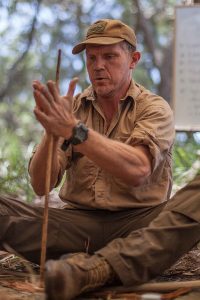
Gordon Dedman is the founder of Bushcraft Survival Australia (BSA), an outdoor bushcraft survival school dedicated to teaching genuine and authentic modern and traditional outdoor living skills through carefully designed educational courses.
Gordon is a former member of the Australian Army 1st Commando Regiment and is presently a survival instructor in NORFORCE, an Australian Army Reserve Regional Force Surveillance Unit (RFSU). NORFORCE conducts patrols in the remote areas of Northern Australia, working closely with Aboriginal communities.
Gordon has trained at and completed numerous Survival and Bushcraft courses and certifications worldwide at schools run by Paul Kirtley, Ray Mears, Dave Canterbury, Lofty Wiseman and Bob Cooper.
For further information, visit:
Bushcraft Survival Australia’s website
Bushcraft Survival Australia’s facebook page
Bushcraft Survival Australia’s YouTube channel
